FUJINON LARGE FORMAT LENS LIST. Since you are viewing this page, you are probably aware of the great lines of large-format lenses that Fujinon made -.
Theteam in Italy has showcased 'Bertha,' a giant large format camera that can be used to capture 1.1 x 1.1m (3.6ft) slides. A report about the camera's creation, as well as some images of the assembly process, were recently shared over at DIY Photography. The team explains that Berta is designed to 'create unique works' using the inversion kit chemical process created by Branco Ottico.Bertha features a modular aluminum frame, a bellows draft measuring around 4m (13.12ft) in length and a 1000mm F6.3 lens. The camera can be used to capture portraits in macro mode, according to the team, which says they also have a mobile darkroom for capturing portraits outdoors. The team will tune the camera in early 2020, then take it and the mobile darkroom on a tour to capture portraits of people on the road. The link describes the intent of the project is to directly produce photographic paper positives, aka large prints, not transparencies.
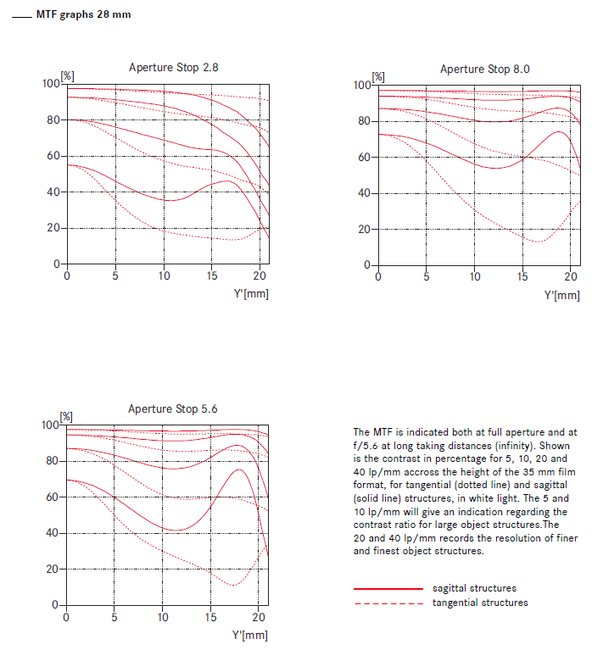
I'm guessing you could produce a very large transparency and backlight it like a duratrans, but for artistic purposes the direct to print approach seems more compelling. There have been a handful of studios in the U.S. That over the years have used an analog direct to print process, and years ago I recall a lab in Tampa that did this using a tweaked Cibachrome process. “One third” is unfortunately very optimistic when lens designs are scaled up. As far as aberrations are concerned (as opposed to diffraction) one cannot expect much change in angular resolution compared to a lens for a smaller format with the same angular FOV, which in this case would be a moderate wide like 24mm in 36x24mm format to match this 1000/5.6 in 1100x1100mm format. And same angular resolution would mean same output resolution in lines per picture height and equal detail in same-sized print.
So it has to be a darned good lens to get significantly better than today’s high end lenses and sensors give.Even in 10”x8” format, lens resolution is below modern film resolution due to the optical limits.Also, to get more than about 1mm of DOF, the lens would need to be stopped way down; f/5.6 would give DOF comparable to about f/0.2 with that 24mm “equivalent” lens. The diffraction becomes a major limit on resolution.
True; or you could get that same “400MP” equivalent far more easily and with far less lighting required by using an 8x10” or even 4x5” view camera (at f/11 or f/5.6 respectively). My own leaptop hack download. I see no point in pushing to the point where the diffraction limits resolution to far below what the film is capable of, at the cost of far higher film and processing costs (and the risk of dazzling portrait subjects with massive lighting!)To repeat, these monster formats used to have a place in the 19th century, but only before enlarging was invented. This is a cute marketing stunt for their negative-to-positive processing technology, nothing more.